Drafting legal letters has traditionally been an expensive and time-consuming process. Individuals and small businesses often rely on costly consultations with lawyers, waiting days for documents that should only take minutes. This dependency on manual drafting restricts access to timely legal communication and places professional-quality letters out of reach for many who need them most.
A second challenge lies in complexity and accessibility. Legal jargon, formatting standards, and procedural requirements make letter drafting intimidating for non-lawyers. Many users either avoid the process altogether or submit weakly structured letters that compromise their legal position. On top of this, geographical and financial barriers further limit access to professional support. The result: delayed communication, high costs, and inequitable access to essential legal tools. A faster, smarter, and more affordable solution was required to democratize legal correspondence.
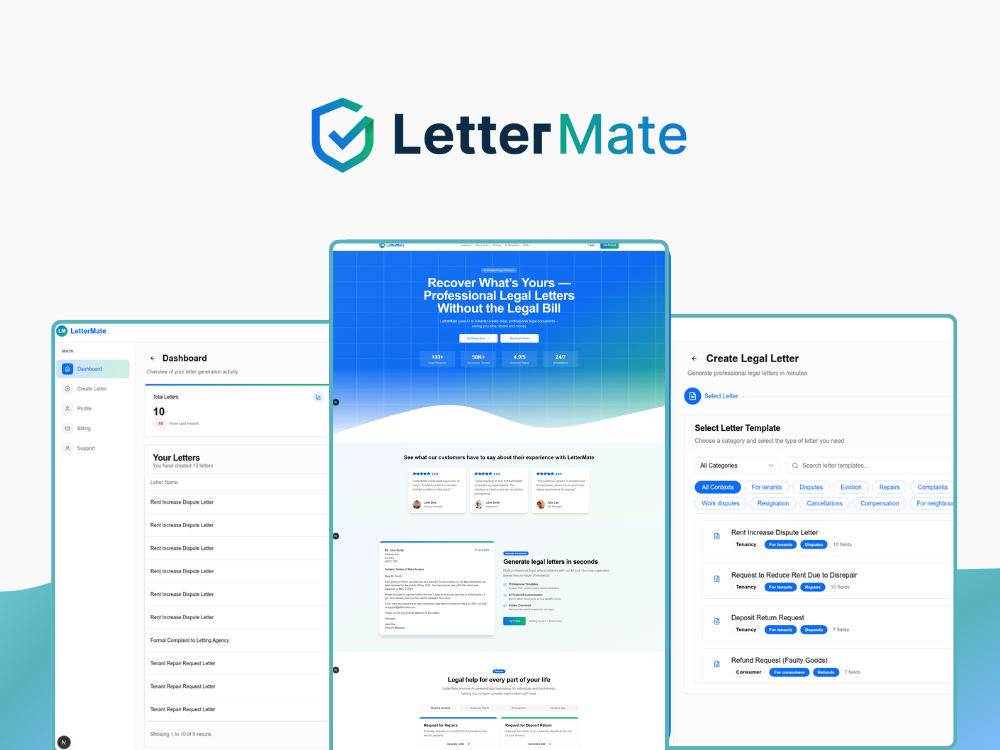
LetterMate was developed to make legal letter drafting fast, accessible, and affordable for individuals and small businesses. Using AI-powered natural language processing, the platform enables users to generate professional-quality legal documents by simply inputting case details into a guided interface. The AI instantly produces tailored letters such as payment demands, lease notices, or dispute communications, cutting the process from days to minutes. Beyond automation, the platform delivers consistency and accuracy, ensuring users have legally sound documents ready for immediate use. This efficiency translates into both time and cost savings, offering a true alternative to expensive lawyer consultations.
The platform also focuses on education and empowerment. As users draft their letters, LetterMate provides real-time explanations and tips, helping them understand the legal context behind the wording. This ensures clarity while building user confidence in legal processes. By combining AI accuracy, cost-effectiveness, and an intuitive design, LetterMate opens professional legal drafting to underserved individuals and businesses. It removes geographical barriers, reduces reliance on costly legal professionals, and enables timely communication where it matters most.