A model demo is easy. A production AI feature needs permissions, data boundaries, tools, structured outputs, evaluations, cost controls, failure handling, and a usable interface.
07 / AI Product & MCP
AI Product Engineering & MCP
Add dependable AI, agent tools, and MCP integrations to a product people already use.
Add production AI features, LLM APIs, agent tools, and MCP integrations to an existing product or focused SaaS platform.
We build the complete product path around the model. MCP is used where a standard tool and context layer improves interoperability; direct APIs remain appropriate when they are simpler and safer.
What the build includes
A complete production workflow.
AI feature architecture
Provider abstraction, model routing, context, tools, structured outputs, memory, permissions, and failure states.
MCP servers and clients
Secure MCP tools, resources, authentication, tenant boundaries, capability discovery, and audit logging.
Product interface
Streaming UX, history, approvals, citations, review, usage states, and clear error handling.
Production controls
Evals, observability, token and latency tracking, caching, rate limits, deployment, and documentation.
Technology and fit
Built with the right tools, not every tool.
The exact stack follows the workflow, security requirements, existing systems, and deployment environment.
Technologies
Model Context ProtocolOpenAIClaudeGeminiLangGraphPythonFastAPITypeScriptNext.jsDocker
Industries
Software companiesStartupsInternal product teamsMarketplacesDeveloper toolsEnterprise products
Expected outcomes
- →AI inside the real product
- →Reusable MCP tools
- →Provider flexibility
- →Measured model quality
- →Maintainable production code
Related work
Proof behind the service.
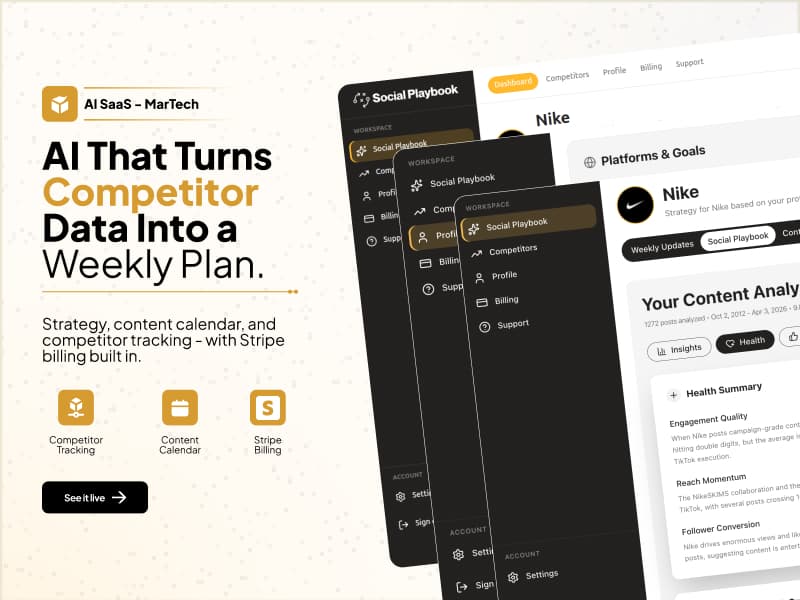
Social Playbook
14,200+ posts analyzed across five social platforms
An AI SaaS product that turns competitor activity and business context into benchmarks, strategy, weekly insights, and a usable content calendar.
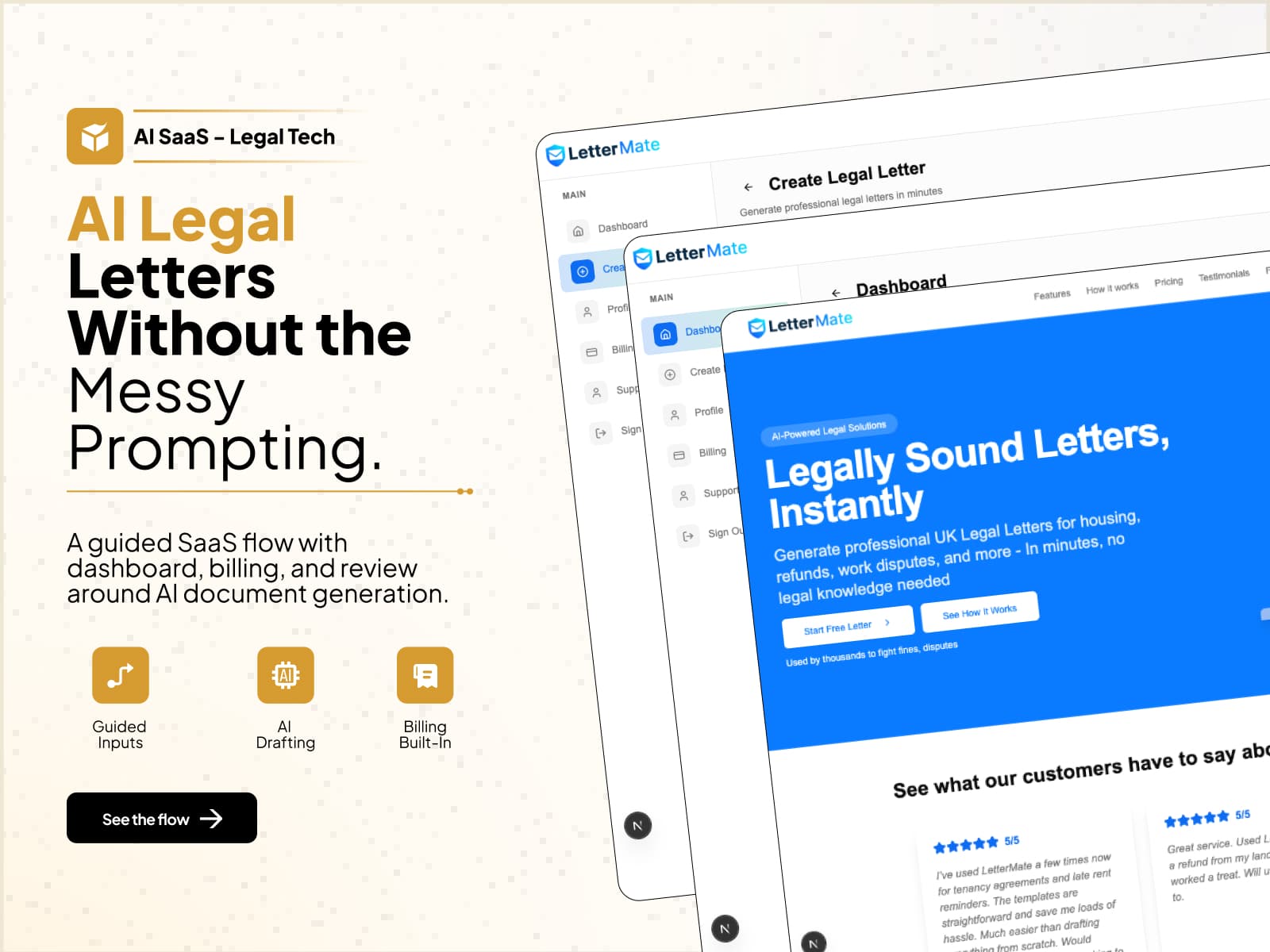
Lettermate
12,000+ legal letters generated with a 70% cost reduction
A complete SaaS customer journey spanning the marketing site, account creation, AI letter generation, document history, subscriptions, support, and administration.
Common questions
Before we scope it.
What is MCP?
Model Context Protocol is an open standard for exposing tools, resources, and prompts to AI applications through a consistent interface.
Does every AI product need MCP?
No. MCP is valuable when tools or context should be reusable across clients and models. A direct internal API is often better for one narrow product integration.
Can you improve a product created with an AI coding tool?
Yes. We audit the code, preserve working product behavior, repair architecture and security issues, and introduce tests and release controls before expanding features.
Next step
Discuss this system ↗Start with one useful release.
Show us the current process. We will recommend the first build, integrations, price range, and what should wait.