Flowe, Fintech and trading
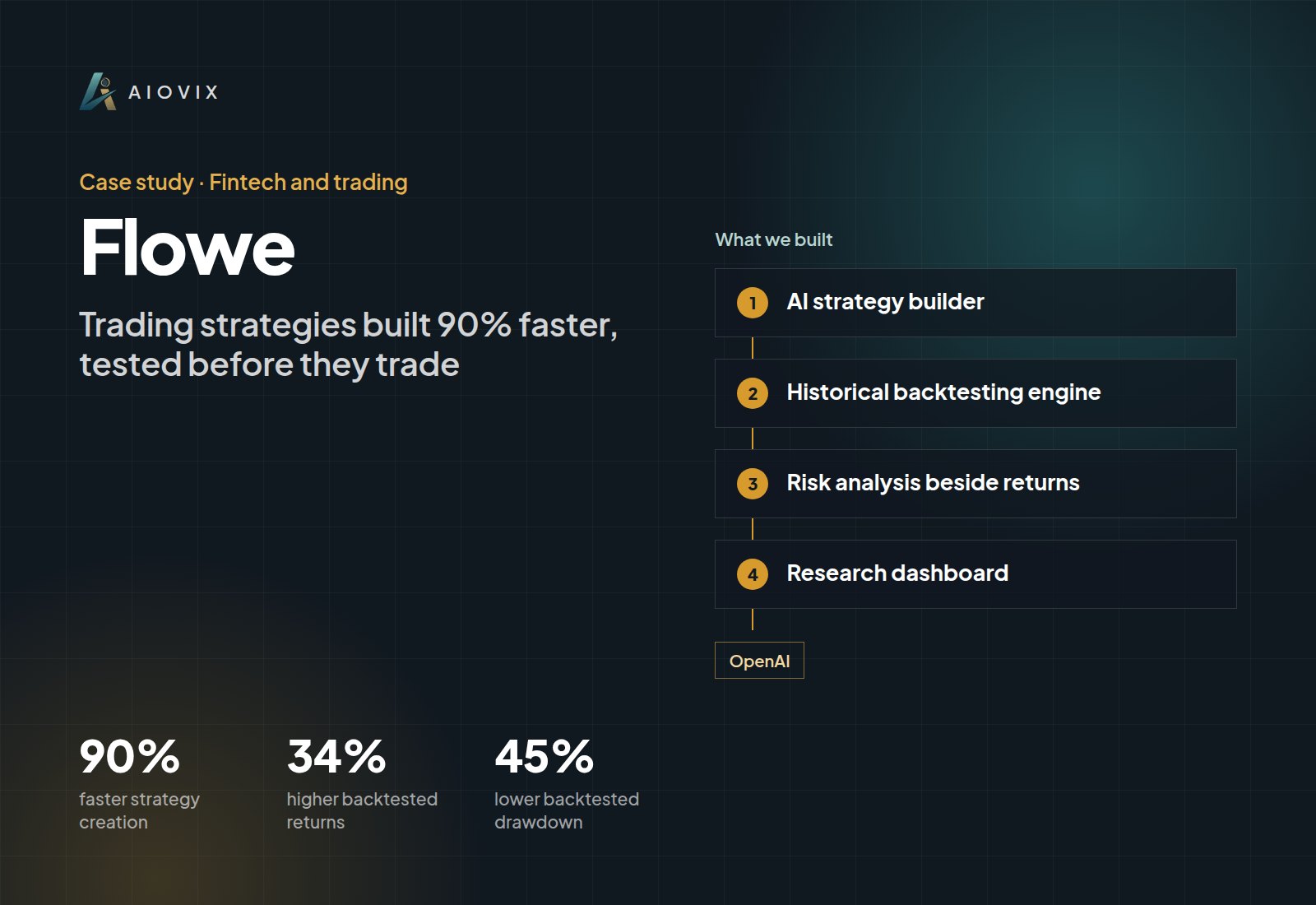
Trading strategies built 90% faster, tested before they trade
A trading-strategy research product that connects AI preparation to backtesting and risk analysis.
Built for: A trading-strategy research team that develops and evaluates rule-based strategies.
- faster strategy creation
- 90%
- faster strategy creation
- higher backtested returns
- 34%
- higher backtested returns
- lower backtested drawdown
- 45%
- lower backtested drawdown
First agent live in one week. A short call. Your first agent, a fixed quote, and the timeline. No obligation.
Sound familiar?
- “Turning a strategy idea into testable rules takes days of spreadsheet work.”
- “We see returns in a backtest but not the drawdown and exposure behind them.”
- “Research is split across notes, spreadsheets, and separate trading tools.”
How the system works.
- Step 1
AI strategy builder
Uses market and indicator context to turn an idea into explicit entry and exit rules the engine can test.
- Step 2
Historical backtesting engine
A Python and FastAPI research service runs those rules against historical data with fees and slippage included.
- Step 3
Risk analysis beside returns
Exposure, drawdown, and strategy performance are reviewed together so a strong return never hides a weak risk profile.
- Step 4
Research dashboard
A React interface lets the user compare strategies, inspect results, and revise rules in one workflow.
What changed.
- 90% faster strategy creation.
- 34% higher backtested returns.
- 45% lower drawdown in backtesting.
- Idea, rules, historical test, and risk review now live in one research workflow.
The AI inside.
OpenAI
Generates entry and exit rules from market and indicator context for the backtesting engine to evaluate.
The full stack.
Frontend
- React
Backend
- Python
- FastAPI
- Backtesting and risk-analysis modules
Data
- TimescaleDB
- Redis
AI and automation
- OpenAI strategy generation
This fits you if...
- Your analysts spend more time preparing tests than reviewing results.
- You want AI to draft rules, but every rule must be tested before anyone trusts it.
- You need drawdown and exposure reviewed next to every return figure.
Start with a free Agent Audit. First agent live in one week
The Finance Operations Agent brings this to your team.
Close the month in days and get paid on time.
Full project write-upRead itClose
Project overview
AI strategy preparation connected to backtesting and risk analysis
Services: AI Fintech ; AI Agents ; AI Workflow Automation
Delivery: Trading-strategy research platform.
Project Scope
The platform connects three areas:
- AI-assisted entry and exit rule generation.
- Historical backtesting with fee and slippage considerations.
- Exposure, drawdown, and strategy-performance analysis.
The Problem
The project brief describes a strategy-development process split between manual preparation, spreadsheets, and trading tools. A trader had to turn an idea into explicit rules, test those rules, and inspect the risk before deciding whether to continue.
A generated strategy explanation cannot replace those steps. Flowe connected them in one research workflow.
What We Delivered
The strategy builder uses market and indicator context to prepare trading rules. The research backend evaluates those rules against historical data. The dashboard presents performance and risk information so the user can compare or revise the strategy.
The documented architecture includes Python and FastAPI for research services, TimescaleDB for historical data, Redis for working state, and React for the interface.
OpenAI supports the strategy-generation layer. The exact historical model configuration is separate from the performance of the trading strategy itself.
Engineering Decisions
Represent the strategy as testable rules. Entry and exit conditions need to reach the historical engine rather than remain prose.
Include execution assumptions. Fees and slippage affect the usefulness of the test, especially when comparing strategies.
Review risk beside returns. A performance view needs exposure and drawdown context.
Separate simulation from live results. A backtest is an evaluation under stated assumptions, not a claim of money earned.
Results and Existing Figures
The completed scope connects strategy preparation, historical testing, and review.
Project results report 90% faster strategy creation, 34% higher backtested returns, and 45% lower drawdown. The returns and drawdown figures describe historical backtesting comparisons, rather than live investment performance.
Technology stack
Documented stack: React; Python, FastAPI; OpenAI strategy generation; TimescaleDB; Redis; backtesting and risk-analysis modules.
Related case studies.
Want this for your team?
Book a short audit call and show us the workflow. You leave with the first agent we would build, a fixed quote, and the timeline.