Calls arrive after hours, staff repeat the same intake questions, and valuable enquiries disappear between the phone, calendar, inbox, and CRM.
01 / AI Receptionist
AI Receptionists
Answer, qualify, book, and follow up without losing the human handoff.
Answer calls, qualify leads, book appointments, and update the CRM.
We design the complete call and lead workflow first. Voice AI handles approved conversations; deterministic rules control booking, routing, CRM updates, opt-outs, and escalation to staff.
What the build includes
A complete production workflow.
Voice and intake flow
Inbound call handling, approved scripts, qualification questions, fallback paths, and human transfer rules.
Booking and CRM
Calendar availability, lead records, transcripts, summaries, ownership, and next actions connected to your existing stack.
Follow-up automation
Missed-call recovery, reminders, lead reactivation, and controlled SMS or email follow-up.
Review dashboard
Call outcomes, failed handoffs, booking status, unanswered questions, and staff review queues.
Technology and fit
Built with the right tools, not every tool.
The exact stack follows the workflow, security requirements, existing systems, and deployment environment.
Technologies
VapiTwilioElevenLabsOpenAI RealtimeClaudeGoHighLevelHubSpotSalesforce
Industries
Expected outcomes
- →Faster first response
- →More answered enquiries
- →More qualified bookings
- →Cleaner CRM records
- →Visible human handoffs
Related work
What we have already shipped.
These examples show the type of workflow, product, or operating system this offer is built to solve.
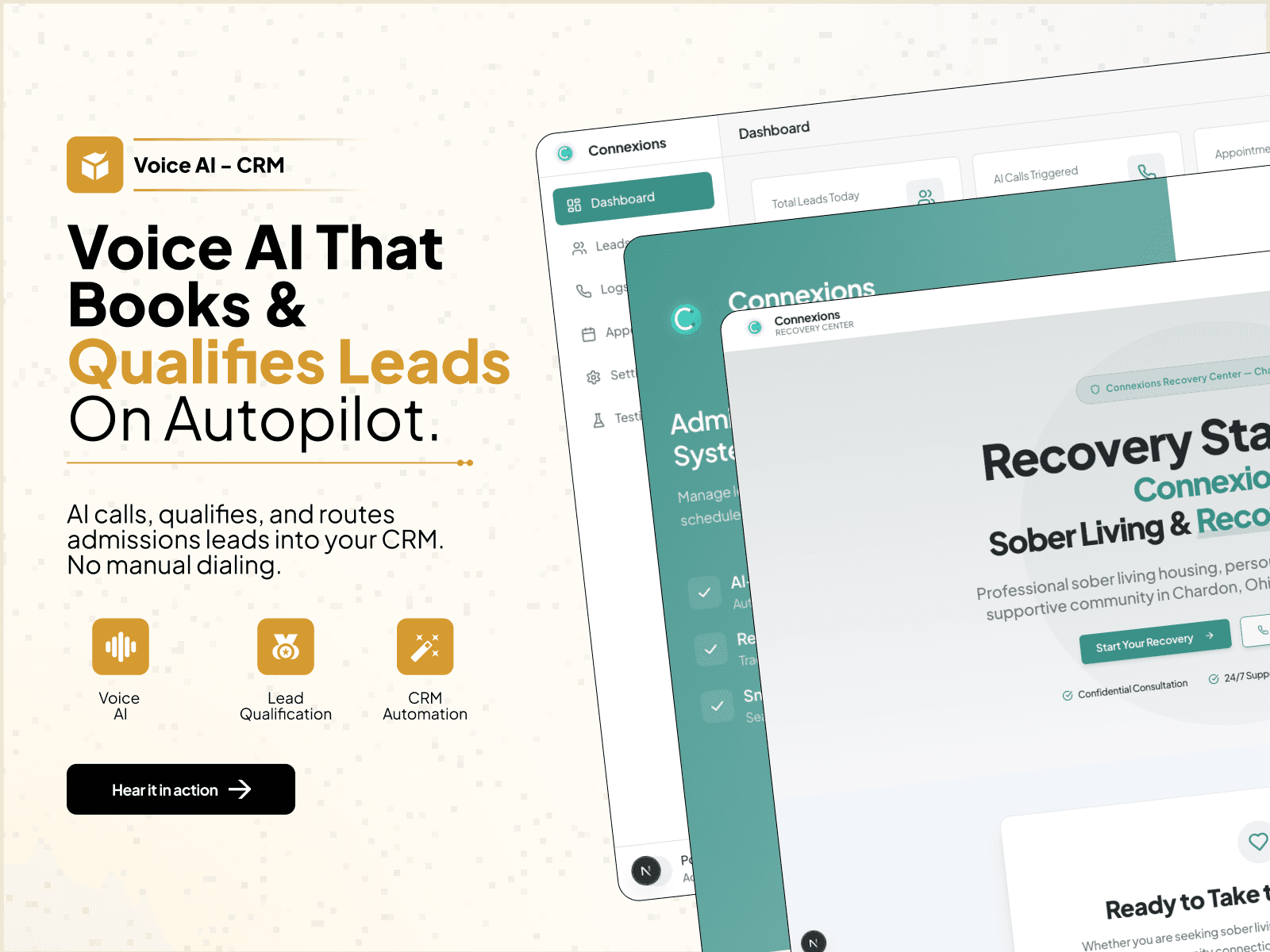
Connexions Recovery
Admissions intake, calls, and staff handoff in one record
A recovery-admissions workflow that connects intake, voice calls, communication history, and staff follow-up.
150+historical call records
28+historical admission leads
4communication paths
Sun Speed CRM
A solar-sales voice workflow with booking and staff transfer
A voice and CRM workflow for solar-sales enquiries, qualification, booking, and staff handoff.
CareLine WhatsApp Assistant
Approved clinic questions and structured intake ready for staff
A WhatsApp workflow for clinic inquiries that turns approved questions and intake into a useful staff handoff.
AIRA Voice AI
Phone-agent experience paired with an operator view of the conversation
An AIOVIX voice product that pairs a phone-agent experience with an operator view of conversation context.
Common questions
Before we scope it.
Is an AI receptionist the same as a basic phone bot?
No. A useful AI receptionist understands natural speech, follows approved intake rules, checks availability or records, completes controlled actions, and transfers uncertain calls with context.
Can it work with our current phone number and CRM?
Usually yes. We can route an existing number through the voice workflow and connect supported CRMs, calendars, practice systems, or custom APIs.
What happens when the caller asks something unexpected?
The agent follows explicit fallback and escalation rules. It can transfer the call, schedule a callback, capture a message, or place the case in a review queue.
Free Audit
Get Free Audit ↗Know what to build first.
We review the workflow, recommend the first build, and give you a rough price range and timeline before you commit.