The team depends on spreadsheets, disconnected tools, and manual updates to run important work. Nobody has one reliable place to see what is happening.
08 / AI ERP & CRM
AI ERP & CRM
Give your team one clear system for the work behind the business.
Sales CRM, operations, roles, reporting, finance records, and connected business workflows.
We design the internal platform around the real operation: records, roles, permissions, workflows, approvals, reports, and integrations that staff can use every day.
What the build includes
A complete production workflow.
Platform foundation
Users, teams, companies, records, roles, permissions, and the core data model for the operation.
Daily workflows
Tasks, approvals, assignments, status changes, notifications, and scheduled work connected in one place.
Dashboards and reporting
Clear views for managers and staff with filters, metrics, exports, and the information needed to act.
Integrations and AI
Connected business tools, document processing, summaries, search, and controlled AI assistance inside the workflow.
Technology and fit
Built with the right tools, not every tool.
The exact stack follows the workflow, security requirements, existing systems, and deployment environment.
Technologies
Next.jsReactTypeScriptPythonFastAPINode.jsPostgreSQLRedisAWSGoogle Cloud
Industries
Expected outcomes
- →One operational view
- →Less duplicate entry
- →Clear ownership
- →Better reporting
- →AI inside daily work
Related work
What we have already shipped.
These examples show the type of workflow, product, or operating system this offer is built to solve.
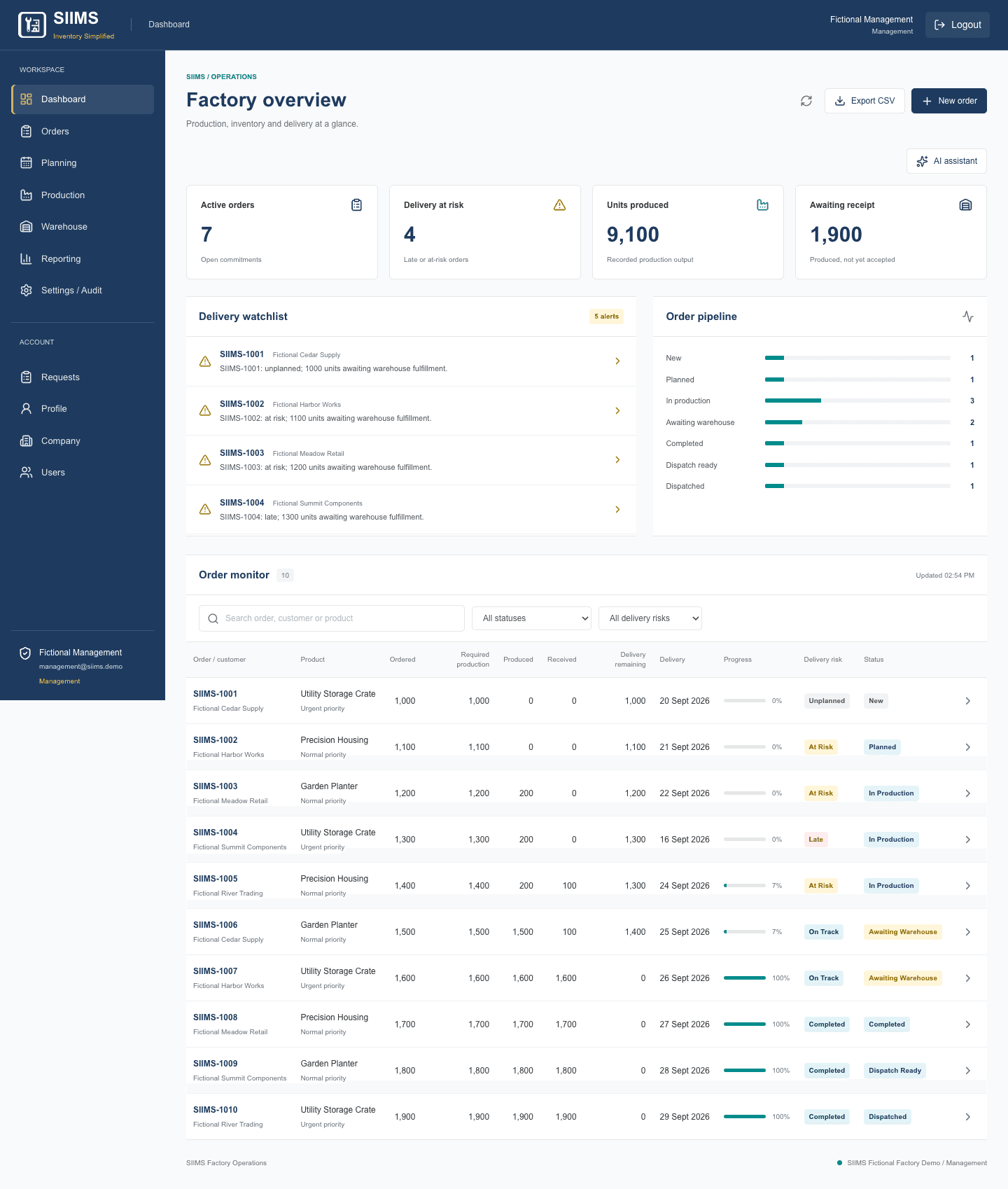
SIIMS
Orders, production, warehouse, and dispatch on the same records
A manufacturing ERP MVP connecting customer orders, machine planning, production output, warehouse fulfillment, dispatch, and a read-only factory AI assistant.
4operational roles
37backend tests passed
17hosted workflow tests passed
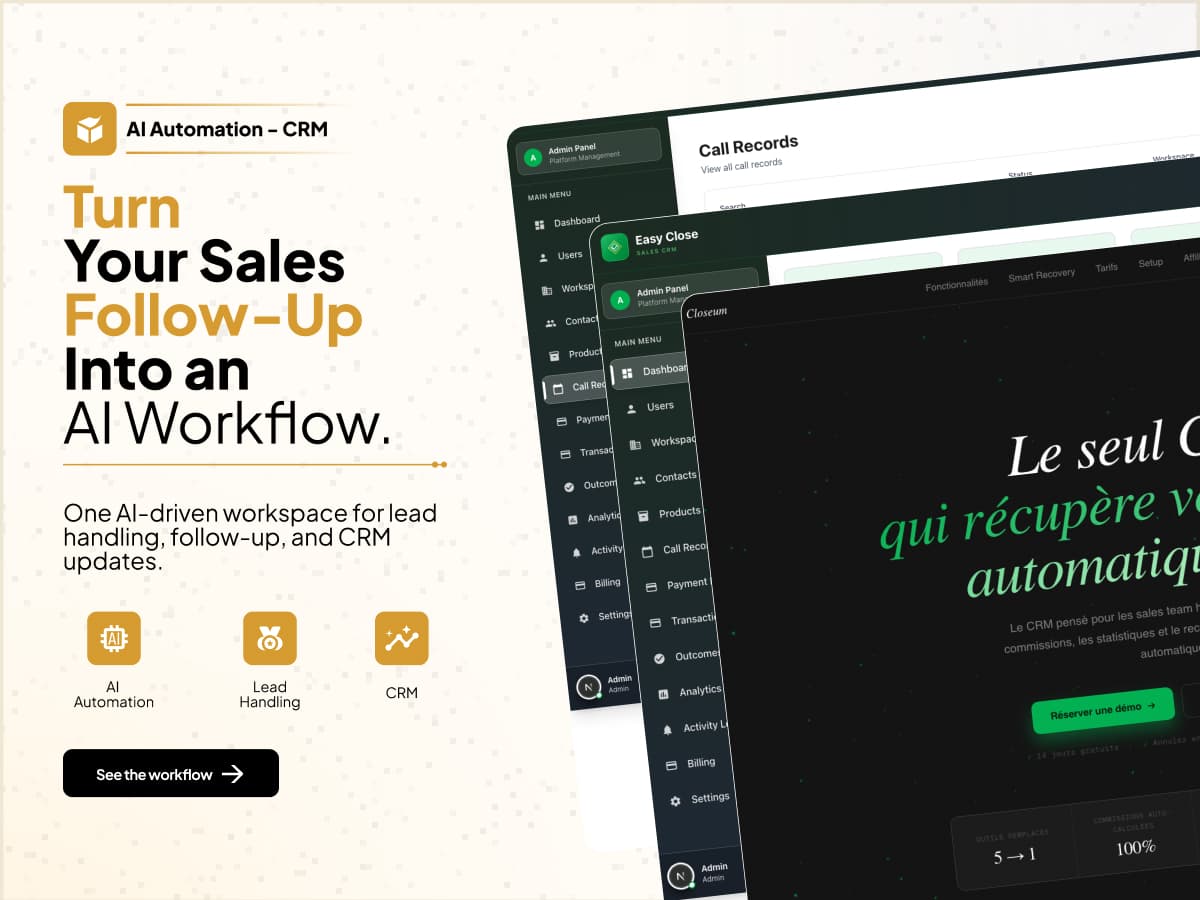
Closeum
13+ connected modules from calls through commissions
A sales platform that carries call context into lead management, reporting, payments, and commissions.
13+connected modules
$99.5K+historical tracked revenue
32historical transactions
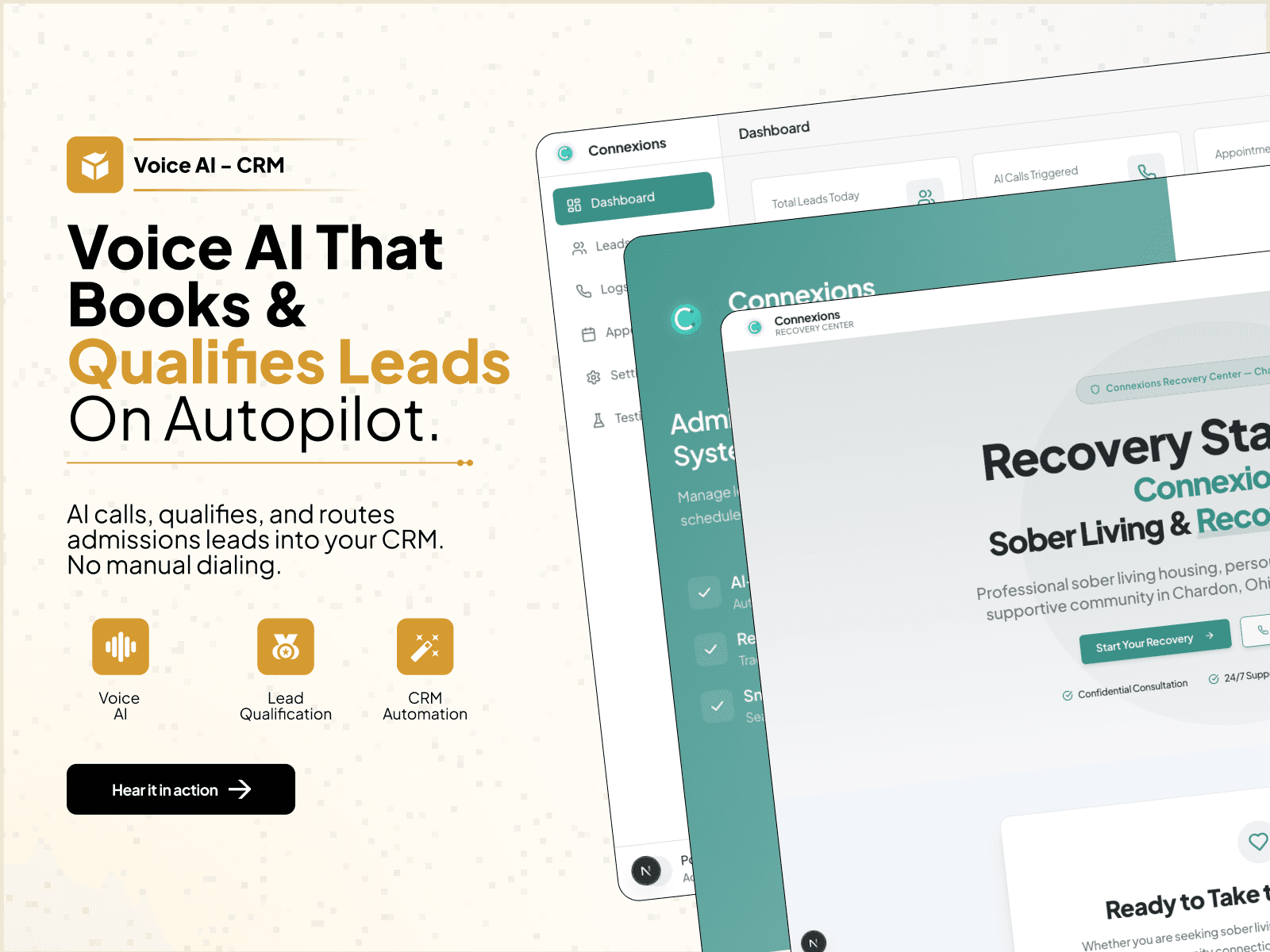
Connexions Recovery
Admissions intake, calls, and staff handoff in one record
A recovery-admissions workflow that connects intake, voice calls, communication history, and staff follow-up.
150+historical call records
28+historical admission leads
4communication paths
Ledgerline
603 tests passed in a dated financial-control verification
A bilingual finance workspace designed to distinguish actual cash, expected cash, and source-system records.
603tests passed
14audit findings remediated
3product roles
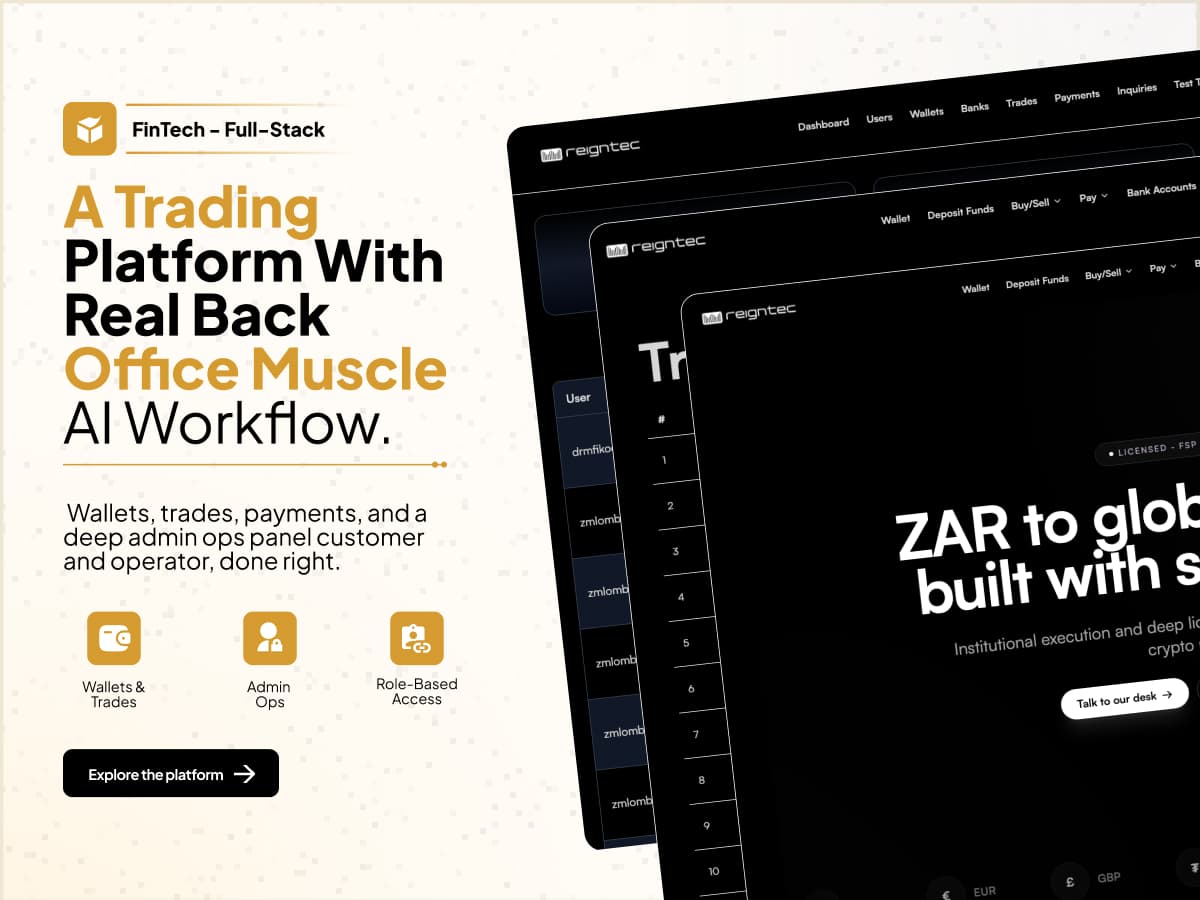
Reigntec
Customer trading workflows connected to financial operations
A customer trading experience connected to wallets, financial actions, referral flows, and administration.
34historical completed trades
6historical linked accounts
18historical inquiries
Fieldline
Jobs, crews, schedules, and billing on the same records
A multi-tenant construction platform that was later extended into AI-assisted billing.
Common questions
Before we scope it.
When does a company need an internal platform?
When important work is spread across too many tools, repeated updates are slowing the team down, or generic software does not match the way the business operates.
Can the platform connect to our existing systems?
Yes. We define which system owns each record and connect the required CRM, accounting, communication, payment, or operational tools.
Can different teams see different information?
Yes. Role-based permissions can control companies, departments, records, actions, and approval access.
Free Audit
Get Free Audit ↗Know what to build first.
We review the workflow, recommend the first build, and give you a rough price range and timeline before you commit.